Money Wallet: A Practical Designer’s Review
First Impressions: A Unique Shape with Clear Purpose
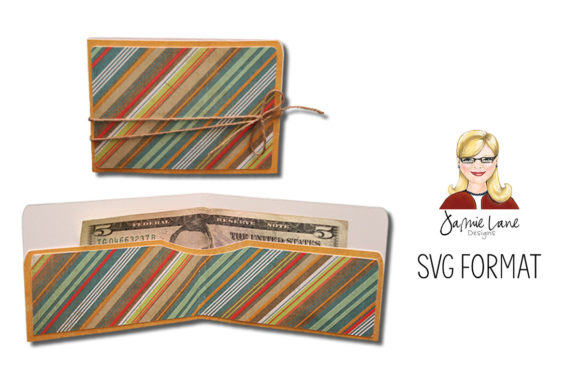
When I first opened the Money Wallet SVG cutting template, I was struck by its clean, dimensional look. It's not just a flat wallet shape—it has depth and structure that immediately suggest it's meant for more than just digital display. The design gives off a minimalist, modern vibe with a touch of sophistication, making it versatile for a variety of embroidery applications. It feels like a piece that could be used in both casual and upscale handmade goods.
The wallet’s folded dimensions of 4 x 3 x 1.8 inches suggest it’s compact but functional, and the open size of 8 x 3 inches gives enough space for customization or layering with other elements. As a designer who often works with personalized gifts and boutique merchandise, I immediately started thinking about how this could be stitched onto a custom tote bag or embroidered patch for a client’s branding.
Real-World Use: Where Money Wallet Fits Naturally
This isn’t a design that screams for attention—it’s subtle, but effective. I tested it out on a sample tote bag and was surprised by how well it held its shape and detail. The 3D SVG format helps in translating that dimensionality into embroidery, especially when layered with applique techniques. It also worked nicely on a sweatshirt mockup, where the texture of the fabric gave it a more tactile feel.
For small business owners and Etsy sellers, this design could be ideal for themed gift sets—think baby shower gifts with embroidered wallets stitched onto burp cloths or personalized aprons. It’s also a great fit for holiday or wedding gifts, especially when paired with satin-stitched initials or dates. The wallet shape itself gives a subtle nod to practicality, making it a meaningful gift that’s not just decorative but also conceptually relevant.
Performance Across Embroidery Surfaces
I tested Money Wallet on a few different fabric types. On cotton and linen, it stitched cleanly and the details held up well. The satin and fill stitches balanced each other, giving the wallet a defined edge without looking too dense. On stretchy fabrics like sweatshirt fleece, I had to add a bit more stabilizer, but it still performed well.
It didn’t fare quite as well on textured or very thin fabrics. The open areas of the design can get lost on dark or busy backgrounds, so I’d recommend testing with different thread colors before committing. On curved surfaces like caps, the corners of the wallet can get a bit distorted if not hooped carefully. It’s not a deal-breaker, but definitely something to be mindful of when planning a project.
Where to Use It Carefully
While Money Wallet is versatile, it does have some limitations. On smaller hoop sizes, the details—especially the folds and inner stitching—can get compressed and lose clarity. I wouldn’t recommend it for very detailed corner work unless you’re working with a larger hoop or a machine that handles fine stitch density well.
Also, if you’re planning to use this in a commercial embroidery setting, be cautious with layered garments or dark fabrics. The design relies on contrast and clean lines to maintain its shape, and those can get lost if not properly adjusted. I found that doing a black and white mockup first really helped visualize how the design would look without thread color interference.
Design Impact: Visual Appeal and Customer Perception
One of the things I appreciate most about Money Wallet is how it enhances the perceived value of a product. It’s not overly complex, but it carries a sense of craftsmanship that elevates handmade items. Whether stitched onto a personalized tea towel or a boutique tote, it adds a touch of thoughtfulness that customers respond well to.
From a branding perspective, this design could easily be incorporated into a small shop’s visual identity. It’s unique enough to stand out but still versatile enough to be used across multiple product lines. I could see it working well in Etsy listings as part of a curated gift set or as a featured design in a digital embroidery bundle.
Designer Notes: Practical Tips for Best Results
- Test on scrap fabric first—especially if you're using it on stretchy or textured materials.
- Check thread color contrast to ensure the wallet’s shape remains visible on dark or patterned backgrounds.
- Review stitch density to avoid puckering or distortion, especially on thinner fabrics.
- Confirm hoop size compatibility—the design works with 8x12 and 12x12 mats, but smaller hoops may compress details.
- Inspect small details like fold lines and inner edges to ensure they stitch clearly.
- Try black and white mockups to evaluate structure and clarity before choosing thread colors.
- Use proper stabilizer when working on curved or stretchy surfaces like caps or hoodies.
- Confirm licensing before selling finished items or digital embroidery bundles that include this design.
Final Thoughts: A Solid Addition to Any Embroidery Collection
Money Wallet is a well-balanced design that offers both visual interest and practicality. It’s not just a novelty—it has real-world application for designers, crafters, and small business owners who want to add meaningful, dimensional elements to their work. Whether you're creating custom apparel, embroidered patches, or personalized gifts, this design has the flexibility to fit into a variety of projects.
If you're looking for a 3D SVG that bridges the gap between function and form, Money Wallet is worth a closer look. It’s not flashy, but it’s dependable—and sometimes, that’s exactly what your embroidery project needs.